The Sauce of Legacy: How a Family Recipe Became a Business and a Cultural Touchstone
There’s something profoundly human about food—it’s more than sustenance; it’s a vessel for memory, identity, and connection. When Richard and Nancy Burchfiel of Clovis decided to turn their family’s pasta sauce recipe into a business, they weren’t just selling a product; they were bottling generations of love, tradition, and a way of life. What makes this particularly fascinating is how their story transcends the typical startup narrative. It’s not about innovation or disruption; it’s about preservation and reconnection. In a world obsessed with the new, they’ve reminded us of the power of the old.
From Family Table to Market Shelf: The Birth of Pizzio’s Pasta Sauce
On the surface, launching a pasta sauce company might seem like a straightforward venture. But for Richard and Nancy, it was anything but. Personally, I think what stands out here is the intentionality behind their decision. They didn’t just stumble into this; they asked themselves a profound question: What are we really good at doing? For them, the answer was cooking—a skill that had been passed down through generations, anchored by Richard’s great-grandmother, Marie Pizzio.
Marie’s sauce wasn’t just a recipe; it was a ritual. Every Thursday and Sunday, her giant pot of sauce fed anyone who walked through her door. This generosity, this act of communal feeding, is what Richard and Nancy sought to recreate. But here’s where it gets interesting: they didn’t just want to replicate the sauce; they wanted to honor the spirit behind it. This raises a deeper question: Can a family recipe retain its soul when it’s scaled for the market?
The Quest for the Lost Recipe
One thing that immediately stands out is the almost mythical quality of Marie’s recipe. It was never written down—at least, not until Richard and Nancy stumbled upon it years after her death. Marie would instruct others with a dash here, a dash there, but no one could quite replicate her magic. This isn’t uncommon in family cooking; recipes are often passed down through observation and intuition, not precise measurements.
What many people don’t realize is how fragile these culinary legacies can be. When Marie passed away in 2014, her recipe seemed lost to time. Richard had been making his own version for years, but it wasn’t the same. It wasn’t until his grandmother, Susanne Pizzio Foster, confirmed that he’d finally gotten it right that the family realized they’d recaptured something special.
But the real twist? They found the original handwritten recipe hidden in Marie’s kitchen while remodeling her house. If you take a step back and think about it, this feels almost serendipitous—as if Marie herself was guiding them to it. This isn’t just a story about finding a recipe; it’s about the universe conspiring to preserve a piece of family history.
Designing a Legacy: The Can as a Time Capsule
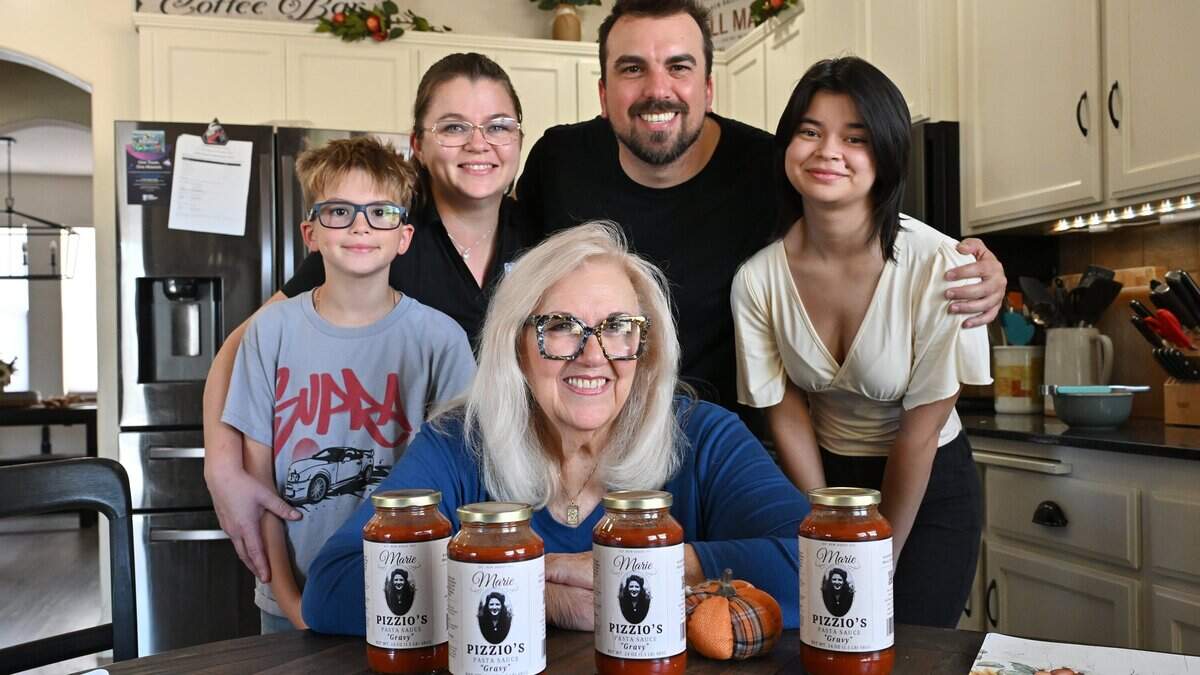
The design of Pizzio’s Pasta Sauce is a masterclass in storytelling. The photo on the can is one Marie sent to her husband, Dominick, during WWII—a poignant reminder of their love and resilience. The motto, “Phones down, pass the bread,” is a nod to the family’s dinner table rules, emphasizing presence and connection.
From my perspective, this is where the Burchfiels’ venture becomes more than a business. They’re not just selling sauce; they’re selling an ethos. In an age where screens dominate our lives, their message feels both nostalgic and revolutionary. It’s a call to slow down, to savor, to connect—values that are increasingly rare in today’s fast-paced world.
The Broader Implications: Food as Cultural Currency
What this really suggests is that food is more than just fuel; it’s a cultural artifact. Every jar of Pizzio’s sauce comes with a recipe from Richard’s mother’s cookbook, further embedding it in a web of family traditions. This isn’t just marketing; it’s an invitation to participate in their legacy.
A detail that I find especially interesting is how this story reflects a larger trend: the rise of heritage-based food businesses. Across the globe, people are turning to family recipes as a way to preserve their cultural identities in an increasingly homogenized world. Whether it’s grandma’s kimchi in Seoul or great-aunt’s tamales in Mexico City, these ventures are about more than profit; they’re about continuity.
The Future of Family Recipes
If we zoom out, the Burchfiels’ story is a microcosm of a broader cultural shift. As globalization erodes local traditions, there’s a growing appetite for authenticity—for food that tells a story. Personally, I think this bodes well for heritage-based businesses. They’re not just selling products; they’re selling narratives, and in a world hungry for meaning, that’s a powerful proposition.
But here’s the thing: scaling a family recipe without losing its essence is no small feat. Richard and Nancy’s success hinges on their ability to balance tradition with innovation. Can they maintain the intimacy of Marie’s kitchen on a larger scale? Only time will tell.
Final Thoughts: A Jar of Generations
Richard said it best: “You think it’s just pasta sauce, but it really is generations of love going into a jar.” And that’s what makes this story so compelling. It’s a reminder that food is never just food. It’s history, it’s memory, it’s identity.
As I reflect on the Burchfiels’ journey, I’m struck by the universality of their experience. We all have that one dish—that one recipe—that connects us to our roots. Whether we choose to share it with the world or keep it close, it’s a piece of us. And in bottling their family’s sauce, Richard and Nancy haven’t just started a business; they’ve created a legacy.
So, the next time you sit down to a meal, take a moment to think about the stories behind the food. Because, as Pizzio’s Pasta Sauce proves, every bite can be a taste of history.